

Surgeon Q&A: "What Are The Mortality Rates of Heart Valve Surgery?" asks Betty
Page Last Updated: June 5, 2025
I'll never forget the flood of dislocating emotions and questions that raced through my mind when Dr. Bad Bedside Manner said to me, "Adam - You need heart valve surgery. And, you need it soon." I felt confused. I felt alone. And, I felt afraid. Specific to the fear, I distinctly remember thinking, "What are the chances I might die during this incredibly complex surgery?" and "Is it heart surgery safe?" and "Is it worth the risk?"
I was reminded of these questions when Betty recently asked me, "What are the percentages of people who die after aortic valve replacement?" To answer Betty's question, I was very fortunate to interview Dr. Patrick McCarthy, who is the Executive Director of the Bluhm Cardiovascular Institute at Northwestern Medicine. During his career, Dr. McCarthy has performed over 10,000 cardiac procedures of which more than 5,000 involved heart valve procedures. Here's what Dr. McCarthy shared with me:

Video available online at:
https://www.youtube.com/watch?v=cCD1oUDbtIU
I hope that helped Betty (and perhaps you) get more comfortable around the mortality rates associated with heart valve surgery. Please take note of Dr. McCarthy's advice to be prepared for your surgeon consult. Write down your questions before you meet with your surgeon. And, please get those questions answered. In addition, you may want to record your consult on your smartphone. Many patients (and their family members) benefit from listening to the consults after those meetings.
Many thanks to Betty for asking such a wonderful question. And, many thanks to Dr. McCarthy for sharing his clinical experiences and advice with our community.
Keep on tickin!
Adam
P.S. For the hearing impaired members of our community, I have provided a written transcript of my interview with Dr. McCarthy below.
Adam Pick: Hi, everybody. It's Adam with HeartValveSurgery.com. We're answering your questions that were submitted at our website and Facebook. Thrilled to be here with Dr. Patrick McCarthy, who's the Executive Director of the Bluhm Cardiovascular Institute at Northwestern Medicine. Dr. McCarthy, thanks for being here.
Patrick McCarthy: Thanks, Adam.
Adam Pick: We're going to be answering a question from Betty DaRouche-Crump who writes, "What are the percentages of people who die after aortic valve replacement?"
Patrick McCarthy: Good question, and obviously important if you're going to undergo surgery. You can't answer that very simply. You can't just say it's 2%, or 5%, or something; it depends on the patient. If we operate on a very healthy 50-year-old with a bicuspid aorta valve, the risk of death may be as low as 0.5%, like 1 out of every 200. If you're talking about an 85-year-old, who has bad lungs and maybe kidney failure and things, you could be looking at 10, 15, or more percent. Those are the patients who we treat more with TAVR these days.
We, as surgeons, and the nurses have ways that we calculate what we think the risk will be. Also, sometimes you have to just use the judgment of the surgeon. Some people just look very frail, like they're going to have a hard time recovering from surgery, so it's an important question. Anyone that is going through it, they should insist that their surgeon give them their best estimate of what they think the risk to their life is to go through surgery.
Adam Pick: Great points as always, Dr. McCarthy. For Betty, I think what you're relaying here is the patients needs to ask the questions.
Patrick McCarthy: Absolutely.
Adam Pick: They need to get educated. Is that right?
Patrick McCarthy: My patients show up and they have a little list of questions, and then by the end of our talk, they've checked them all off. If we didn't get through all of them – if we only got through 18 out of the 20 – then they ask the other two. They should just bring that along, and they should ask about that stuff.
Adam Pick: Great advice. Dr. McCarthy, thanks for everything that you're doing.
Patrick McCarthy: Thanks, Adam.
Adam Pick: Thanks for taking care of the patients. We always say here, "Keep on tickin!"
Written by Adam Pick - Patient & Website Founder

Written by Adam Pick - Patient & Website Founder
Adam Pick is a heart valve patient and author of The Patient's Guide To Heart Valve Surgery. In 2006, Adam founded HeartValveSurgery.com to educate and empower patients. This award-winning website has helped over 10 million people fight heart valve disease. Adam has been featured by the American Heart Association and Medical News Today.
Comments





Adam's Newest Blogs


New Community Posts
Blog Categories
- Adam's Updates
- Aneurysms
- Aortic Stenosis
- Aortic Valve Repair
- Aortic Valve Replacement
- Atrial Fibrillation
- Before Surgery
- Bicuspid Aortic Valve
- Heart Valve Replacement
- Medical Technology
- Mitral Regurgitation
- Mitral Valve Repair
- Patient Stories
- Pulmonary Valve
- Recovery
- Ross Procedure
- Surgeons & Hospitals
- Tricuspid Valve
Blog Categories
- Adam's Updates
- Aneurysms
- Aortic Stenosis
- Aortic Valve Repair
- Aortic Valve Replacement
- Atrial Fibrillation
- Before Surgery
- Bicuspid Aortic Valve
- Heart Valve Replacement
- Medical Technology
- Mitral Regurgitation
- Mitral Valve Repair
- Patient Stories
- Pulmonary Valve
- Recovery
- Ross Procedure
- Surgeons & Hospitals
- Tricuspid Valve
Blog Categories
- Adam's Updates
- Aneurysms
- Aortic Stenosis
- Aortic Valve Repair
- Aortic Valve Replacement
- Atrial Fibrillation
- Before Surgery
- Bicuspid Aortic Valve
- Heart Valve Replacement
- Medical Technology
- Mitral Regurgitation
- Mitral Valve Repair
- Patient Stories
- Pulmonary Valve
- Recovery
- Ross Procedure
- Surgeons & Hospitals
- Tricuspid Valve
Heart Hospital Map

Search for heart hospitals that specialize in heart valve treatment.
The Patient's Guide
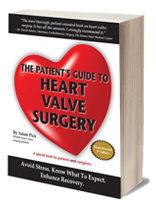
This book has helped over 47,000 patients and caregivers from diagnosis to recovery.
New Posts From Our Community


Find Heart Valve Surgeons
Search 1,500 patient-recommended surgeons
Heart Hospital Map
Search for heart hospitals that specialize in heart valve treatment.
The Patient's Guide
This book has helped over 47,000 patients and caregivers from diagnosis to recovery.
Leave a Comment